
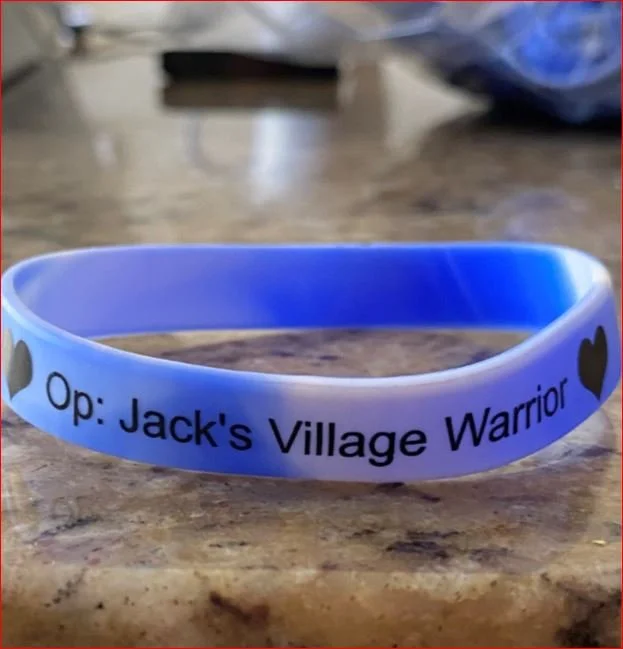
Our Story
Operation Jack’s Village: Is a five-part Infrastructure for protecting every child (2020-2027) A dual civic and durable non-clinical modern readiness and risk-reduction model to ensure not one more child is lost to suicide in Oldsmar
Why We’re Here
What We’ve Learned Since 2020
Systems were fragmented, reactive, and developmentally inappropriate
Students, families and educators were carrying too much alone
Early signs of struggle were often missed or invisible
Youth agency, confidence, and readiness were collapsing long before crises appeared
The Solutions are simple, but they are not Easy.
Root Cause: Algorithms, Adolescence, and Activating the Countermeasures
The good news: we now know how to fix it. And we have the tools to do it together.
Over six years and 22,000 hours of investigation, our Village uncovered the truth about what children were facing:

The Promise
〰️
The Problem
〰️
The Prevention
〰️
The Process
〰️
The People
〰️
The Promise 〰️ The Problem 〰️ The Prevention 〰️ The Process 〰️ The People 〰️
Operation Jack’s Village: Our Seven‑Year Journey (2020–2027)
A Commitment to Truth, Accountability, and Protecting Every Child
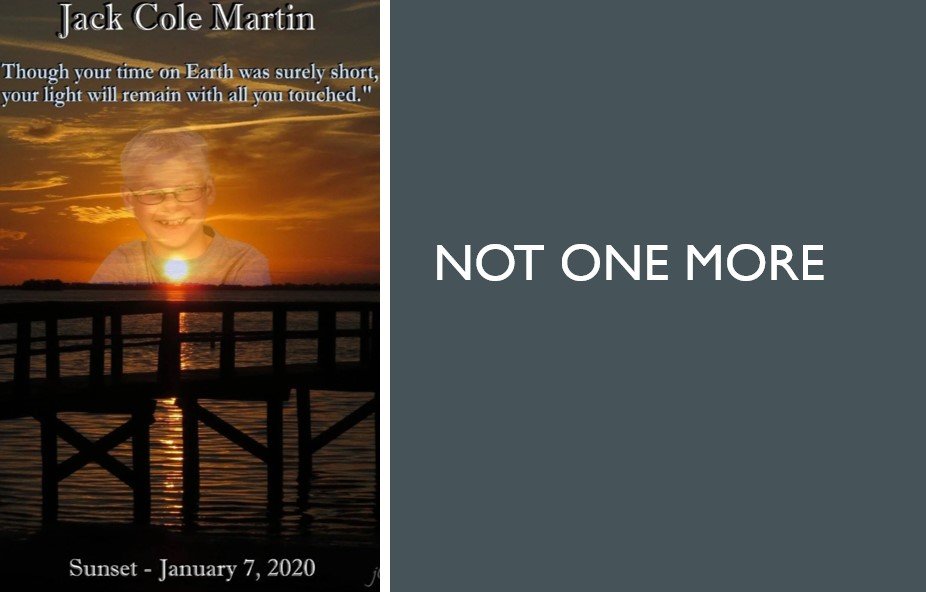
January 7th, 2020 the loss of Jack
January 16, 2020 the hard questions from Jack’s family
Asking for truth! Three questions no community ever wants to face:
“He had to have thought about this before?”
“Why didn’t I know?”
“Why didn’t anyone know?”
March 2nd, 2020 OJV is born
OJV Leadership is formed
The Charter: Respond by launching a investigation to uncover the truth. Start a DMAIC.
Executive Direction: Estimated thorough investigation and corrective action it will take some time, but it is a necessary process. No matter how painful, answer the questions, create countermeasures, educate the public on the following year of root cause, publish the root causes and call to action required, evaluate the need for the organization past full disclosure.
We flexed double duty to support no more losses during the rest of 2020 - 2026 while working the investigation, preparing the release of information, and the decision process/timeline for is there a next chapter for OJV.
Why This Matters
The Village Standard for Truth, Prevention, and Accountability
This seven‑year journey is more than a process. It was a promise to Jack: How did we lose a child, where was his village, what will it take never be invisible again.
It takes a Village.
People often jump to conclusions, blame individuals, or “fix” based on assumption. This process forces you to slow down, gather real evidence, and understand the problem. Lean Six Sigma investigations, in plain terms, is the disciplined way a community uncovers the truth about a failure, repairs the protective infrastructure, and ensures no child is ever left vulnerable in the same way again. The process yields a 99.99966% accuracy rate in complex problem solving.
1. Get the truth, not a story
2. Find the real root cause(s)
3. Fix the problem, not just “fix blame”
4. Prevent the problem from coming up again
5. Use 21st Century Innovation to Solve Population Level Problems
6. Create Measurable Youth Transparency, Responsive, Accountable, through competence
Our Journey
2020 — Charter
The starting point for this work was not policy analysis or organizational theory. It was a public‑health crisis that had become impossible to ignore: a rapid rise in youth, adolescent, and emerging‑adult mental‑health distress. Jack’s loss made that crisis visible in the most personal and urgent way. His collapse was not the result of a single moment but the culmination of chronic developmental overload—an overload shaped by the systems surrounding him.
This tragedy raised a fundamental question: How could an ordinary Sunday evening trigger such overwhelming distress in a child who appeared to be functioning? We must answer that question and that would require examining the entire ecosystem around him—his “village”—and ultimately revealed truth, whatever that is and not matter how painful. #notonemore
2021 — DEFINE the crisis
Florida faces a population‑level public‑health crisis rooted in chronic developmental overload. Youth mental‑health distress, family instability, educator burnout, and workforce pipeline collapse all trace back to 50 years of policy drift that exceeded human developmental capacity.
Problem Statement: Public institutions—especially secondary education—operate beyond human capacity, producing predictable harm across generations.
The Public‑Health Crisis Was the Starting Point
The work did not begin with policy analysis or organizational theory. It began with a devastating public‑health reality: youth and adolescent mental‑health distress had reached crisis levels, and Jack’s loss made that crisis visible in the most personal and urgent way. His collapse was not the result of a single moment or a single factor—it was the culmination of chronic developmental overload that no child should be expected to carry.
This crisis forced a fundamental question: How could an ordinary Sunday evening trigger such overwhelming distress in a child who appeared to be functioning?
The answer required looking far beyond individual circumstances.
2022 — MEASURE the evidence
A forensic review revealed:
50 years of policy misalignment
accelerating expectations and compressed developmental timelines
destabilized structural, analog, and digital environments
rising youth distress and declining readiness
burnout across all youth‑serving professions
erosion of family and community scaffolds
The crisis is measurable, systemic, and statewide.
The Public‑Health Crisis as the Origin
The investigation began with the recognition that youth mental‑health distress had reached crisis levels across communities. These patterns were not isolated or random; they reflected population‑level exposures embedded in daily environments. Secondary education emerged as a primary site of exposure, where accelerating expectations, compressed developmental timelines, and unpredictable routines created chronic stress conditions for millions of children.
This crisis was not external to education—it was a predictable output of system design.
Population‑Health Exposure Reveals Institutional Misalignment
As the team mapped Jack’s ecosystem, the pattern became clear: children were experiencing chronic stress exposures inside the very institutions meant to support their development. These exposures accumulated across developmental stages, affecting emotional regulation, cognitive load, and overall wellbeing.
The review showed that the crisis was not caused by individual weakness or isolated incidents. It was the result of institutional structures that no longer aligned with human biology or developmental science.
Secondary education, in particular, had become a primary site of exposure:
accelerating expectations
compressed developmental timelines
constant performance pressure
unpredictable routines
digital and social acceleration
adult systems operating beyond capacity
The crisis was not simply about mental health. It was about developmental mismatch—a system demanding more than human biology and developmental science could sustain.
Public Institutions Exposed a Deeper Reality in Public Policy
The forensic review uncovered a 50‑year drift in public policy:
policies implemented without developmental guardrails
mandates that exceeded the capacity of children and adults
reactive solutions that created new crises
accountability systems that rewarded compliance instead of wellbeing
2023 — ANALYZE getting to root cause
NOTE: IN THE MIDDLE OF THIS ANALYSIS,Florida Atlantic University’s Schmidt College of Medicine. Suicide is now the No. 1 cause of death for teens ages 13 and 14 in the U.S.
After 22,000 hours of review, one conclusion stood above all others:
The system was demanding more than human developmental capacity could sustain.
This misalignment was the root cause of:
the youth mental‑health crisis
the collapse in readiness
the destabilization of families
the burnout of educators and clinicians
the erosion of community scaffolds
the workforce pipeline breakdown
Jack’s story illuminated what the data had been signaling for years: children cannot accelerate their maturation on command, and adults cannot absorb unlimited emotional and operational load.
Answering that question required examining the entire ecosystem around him—his “village”—and ultimately revealed a deeper truth: public institutions, especially secondary education, had drifted far from alignment with human developmental capacity.
The review showed that the crisis was not caused by individual weakness or isolated incidents. It was the result of institutional structures that no longer aligned with human biology or developmental science.
This drift destabilized the structural, analog, and digital environments children depend on. What began as a public‑health investigation revealed a deeper truth: public policy had unintentionally created conditions that exceeded human capacity.
This crisis was not external to education—it was a predictable output of system design.
Vicarious Trauma as a System‑Level Outcome
Children internalize the instability of the systems around them. When adults are overwhelmed, children feel it. When institutions operate in crisis mode, children absorb the consequences. This is how vicarious trauma becomes a population‑level phenomenon.
Jack’s loss made visible what had been hidden in plain sight.
adults operating in crisis mode
institutions overwhelmed by mandates
families absorbing pressures beyond their capacity
peers experiencing similar overload
digital environments amplifying stress
Children internalize the instability of the systems that surround them. When adults are overwhelmed, children feel it. When institutions are misaligned, children absorb the consequences. This is how vicarious trauma becomes a population‑level phenomenon.
Jack’s story made visible what had been hidden in plain sight.
The 50‑Year Drift: How We Arrived Here
The drift unfolded across three societal algorithms:
Structural — policy, governance, institutional design
Analog — family systems, community scaffolds, adult roles
Digital — acceleration, exposure, cognitive overload
Together, they produced:
a public‑health crisis
educational decline
readiness collapse
workforce destabilization
The human cost is immeasurable. The economic cost is staggering. The developmental cost is generational.
The Adults Who Serve Children Were Destabilized Too
The review showed that adults across every sector were experiencing the same overload:
parents
teachers
clinicians
caseworkers
law enforcement
youth pastors
coaches
mentors
They were asked to carry responsibilities that exceeded human capacity, often without training, support, or predictable routines. Burnout became a public‑health issue. Turnover became a structural threat. Every youth‑serving profession entered crisis.
The system did not fail because adults stopped caring. The system failed because we demanded more than human capacity could sustain.
The Pattern Was Clear
Across all sectors, the same algorithm repeated:
Well‑meaning, reactive solutions → implemented without developmental guardrails → that exceeded human capacity → creating new crises → triggering more reactive solutions → further exceeding capacity.
This is how systems break—not through malice, but through misalignment.
The root cause is misalignment between expectations and human developmental capacity.
Key drivers:
policies implemented without developmental guardrails
reactive solutions that exceeded capacity
institutional overload normalized as “rigor”
adults absorbing unsustainable emotional and operational load
children internalizing systemic instability
This is not a failure of intention. It is a failure of alignment.
2024 — IMPROVE Innovate, Restore, and Sustain
Restoring What the Last 50 Years Eroded
Florida’s modernization strategy restores:
developmental guardrails
predictable, capacity‑aligned routines
clear roles and boundaries for adults
operational clarity and coherence
21st‑century technical infrastructure that supports human systems
Improvement Goal: Rebuild a statewide developmental operating system that aligns every expectation with human capacity.
The Question Before Florida
Florida now stands at a crossroads. The question is simple:
Will we continue the drift, or will we restore alignment with human developmental capacity?
Every policy, every program, every expectation must now be measured against one standard:
Does this align with human capacity and developmental capacity?
If not, we do not implement it. If yes, we build it into the statewide developmental operating system.
This is not reform. This is restoration.
2025 — CONTROL Sustaining the System
To prevent future drift:
evaluate every policy and program against developmental capacity
maintain predictable routines and guardrails
ensure cross‑sector alignment
monitor system health using developmental and operational metrics
embed continuous improvement cycles (LSS, PMI, FPA)
Control Standard: If it exceeds human capacity, it does not enter the system.
2026 — SUMMIT REVIEW
We present the full findings to the community of Oldsmar. The Village reviews, decides the feasibility, reviews the challenges, and validates or rejects the plan.
When expectations match human capacity:
children thrive
families stabilize
educators regain dignity
agencies align
the workforce pipeline strengthens
public‑health risk declines
Florida restores the conditions that allow communities to flourish.
2027 — ojv Board SUNSET CLAUSE VOTE
This decision honors the Charter and ensures accountability to the children we serve.
NEXT STEPS - Will there be a NEW CHARTER for OJV to IMPROVE Innovate, Restore, and Sustain with the 21st Century Capacity Needs for secondary age children?
The OJV Board decides:
Dissolve
Pause
Expand
This requires participation, it is not something OJV can accomplish as a small non-profit organization. Realistic expectations mean a commitment to addressing root cause as a new charter. If that cannot be achieved, OJV will not exist as a zombie organization when suicide is the lead cause of death for 13 & 14 year olds. The work of our initial charter is complete. A full reveal of that information will be presented on July 18, 2026. The commitment from those who support the scope, schedule, and cost of the Improvement and Control plan hold the balance of what comes next.
GOD BLESS!
2026 — Summit Review
OJV Leadership set the direction for a full public accounting of the DMAIC record. The Village reviewed findings, provided feedback, and validated or challenged conclusions.
THE PROGRESS (needed to continue)
Operation Jack’s Village is already shifting the landscape:
Kids choosing real‑world creativity over endless scrolling
Families finding connection, clarity, and support
Volunteers stepping into roles that match their strengths
Partnerships forming across Oldsmar
Community members interacting more face‑to‑face
Teachers taking the PD for PBL and Coaching
A shared vision for youth well‑being and financial stability taking root
Every talent offered, every hour volunteered, every dollar invested—it all builds the village.
2027 — Sunset Clause Vote
OJV Leadership set the direction for a transparent, criteria‑based decision using the Feasibility Score and Decision Rubric. The Village will determine whether OJV dissolves, pauses, or expands.
Section 4. Binding Effect
This Article shall serve as the authoritative record of OJV’s seven‑year inquiry and shall guide the Village’s decision‑making at the 2026 Summit and the 2027 Sunset Clause Board vote.
The solutions are simple, but they aren’t easy. - Dr. Rahul Mehra
Who’S doing the work to make them easy? - Liz Martin